How many luxury ads have you seen this year that look too perfect?
Prada saw the same thing, and decided to do exactly the opposite.
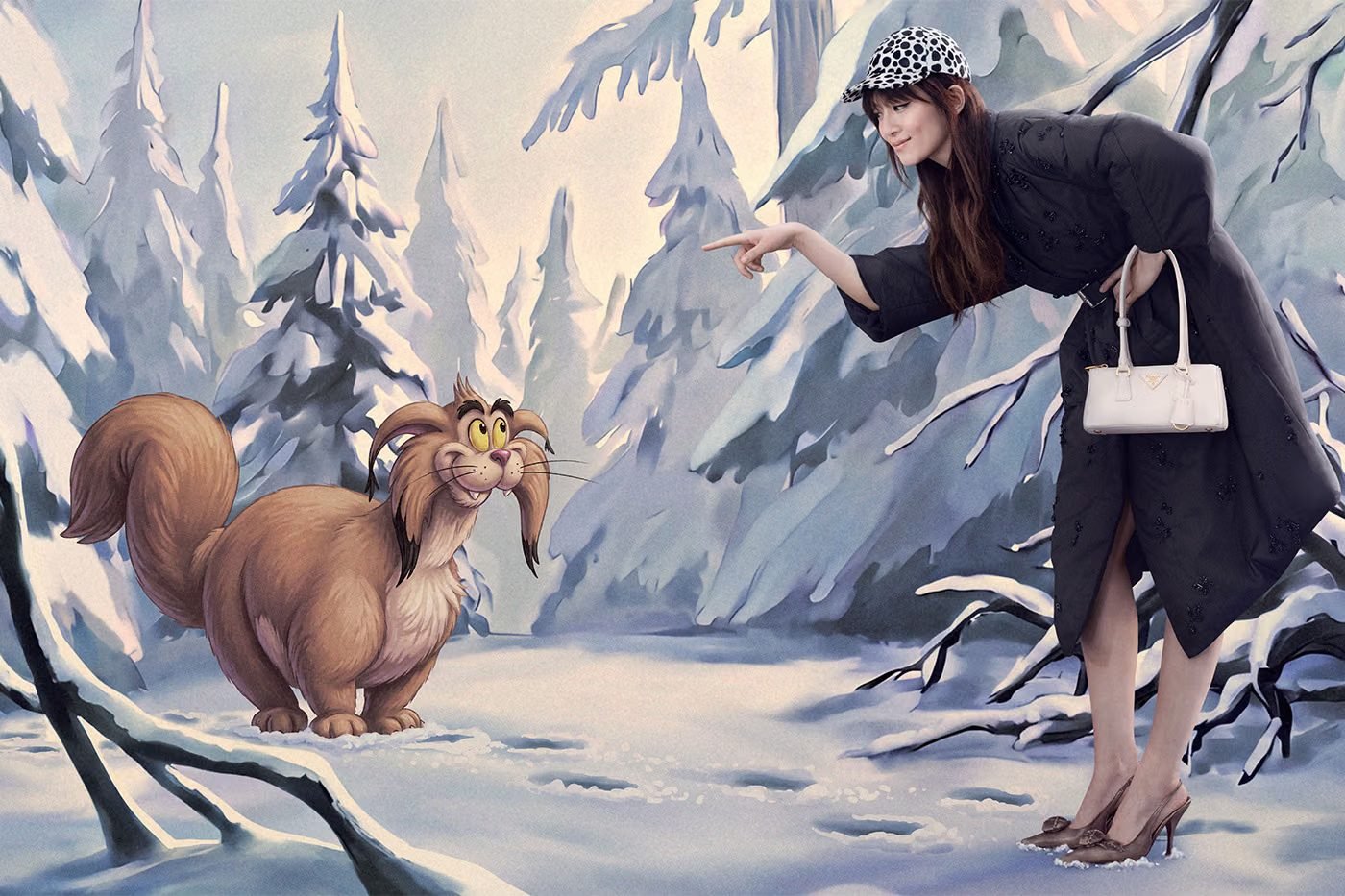
In 2026, while the whole fashion market is obsessed with generative AI (perfect images, synthetic models, impossible settings), Prada launched its Christmas campaign in a way that looked like strategic madness: “Drawing Prada”, hand-drawn illustrations, real actors in illustrated settings, with no AI involved.
The result? A campaign that doesn’t just sell. It redefines what true luxury means in a world saturated with digital perfection.
Welcome to the new battlefield of luxury: humanity.
Watch the full campaign video
The trap of digital perfection
The luxury market is living a cruel paradox in 2026: AI is fast, cheap and scalable, and it is killing luxury without anyone noticing.
- Luxury brands use generative AI to create “perfect” campaigns.
- Synthetic models dominate fashion catalogs.
- Settings and environments are rendered by machines.
- Everything becomes beautiful, clean and indifferent.
The result? Luxury has become a digital commodity: indistinguishable and soulless.
The secret nobody says is this: digital perfection doesn’t sell luxury. Humanity sells luxury. Luxury has always been about touch, the controlled imperfection that proves someone, an artisan, an artist, a real person, spent hours on it. Luxury is the opposite of efficiency. Luxury is resistance.
The real pain is that luxury brands have lost the narrative. They compete on efficiency (AI) when they should compete on humanity.
Prada noticed this and flipped the game.
The Prada triad: pain, strategy and solution
Prada works in three simple but devastating moves.
1. Pain: digital saturation
The luxury market in 2026 is full of perfection. Campaigns from Gucci, Louis Vuitton and Dior, all with AI, all looking rendered. The luxury customer is tired of beautiful. They want real.
The question nobody was asking was: what if we rejected AI completely?
2. Strategy: the positioning of humanity
Prada drew its strategic thesis in a simple way: “Luxury is tactile, not digital. Luxury is hand, not algorithm.”
In practice, this meant:
- Rejecting generative AI in the campaign.
- Bringing illustrator John Pomeroy into the spotlight.
- Casting real actors (Sadie Sink, Maya Hawke and Luther Ford): people, not simulacra.
- Mixing two worlds: photographed reality and hand-drawn illustration.
- Making the impossible feel possible through manual craft.
The message: “You want perfection? Look elsewhere. You want truth, you want to see an artist’s hands? Welcome to Prada.”
3. Solution: “Drawing Prada”, the campaign
The solution isn’t pretty. It’s tactile.
Photographs of Sadie Sink in illustrated environments. Hand-drawn sets. Animal characters that look like they stepped out of children’s tales. Lighting that connects the real and the illustrated worlds, as if they belonged to the same universe.
Result: a campaign that proves controlled imperfection is more luxurious than digital perfection.
Why it works (and why nobody else does it)
Prada made a choice that looked like business madness. Using AI would be faster, cheaper and more scalable.
Instead, Prada went the opposite way: slow, expensive and impossible to scale. It hired a renowned illustrator, photographed real actors and synchronized lighting and perspective between reality and drawing.
Why? Because the real pain wasn’t “making a pretty campaign”. The real pain was regaining the luxury narrative. And you don’t regain a narrative with efficiency. You regain it with resistance, with choices that make no short-term commercial sense but make long-term strategic sense.
Prada isn’t selling handbags in its Christmas campaign. It is selling the idea that Prada is the brand that says “no” to AI when everyone is saying “yes”.
AI versus humanity in luxury
| Dimension | AI-driven campaign (digital commodity) | “Drawing Prada” campaign (humanity) |
|---|---|---|
| Execution speed | 2 to 3 weeks | 3 to 4 months |
| Production cost | Low (cloud computing) | High (artist, photographer and creative team) |
| Scalability | Infinite (render as many times as you want) | Limited (every frame is drawn by hand) |
| Differentiation | None (everyone uses the same AI models) | Total (nobody else does it this way) |
| Narrative to the customer | “Look how beautiful and efficient we are” | “Look how many hours an artist spent here for you” |
| Human touch | Zero | Maximum |
| Emotional impact | Temporary admiration | Lasting respect |
| 2027 outlook | Obsolete (every brand does it) | Relevant (the brand that resists wins) |
Luxury is not efficiency. Luxury is resistance.
Here lies the difference between optimization and meaning. Optimizing would mean using AI: faster, cheaper, “smarter” in the corporate sense.
Meaning is something else. It is someone saying: “I’ll spend four months drawing every detail by hand, because the customer deserves truth, not an algorithm.”
AI luxury campaign: a perfect render of a synthetic model in a digital setting. The customer thinks “pretty, next” and forgets it within 48 hours.
“Drawing Prada” campaign: a real actress in a hand-drawn setting, where every tree was drawn by an artist. The customer thinks: “someone worked on this. A lot. That’s why it’s special.” They share it, talk about it, buy.
Which narrative would you rather be on the side of?
Signs your brand has lost the luxury narrative
- You use generative AI in your campaign because “everyone uses it”. If everyone uses it, you don’t differentiate, you homogenize.
- Your campaign is beautiful but weightless. There is no visible manual work and no creative resistance.
- You can’t say how long someone worked on your campaign. Luxury is time. Without time to tell, there is no luxury to sell.
- Your customers admire your brand, but don’t respect it. Admiration is fleeting. Respect lasts, and it comes from hard choices.
- You compete on market speed. Luxury doesn’t compete on speed. Luxury competes on meaning.
- Your campaign could have been made by any brand with the same AI software. If so, it isn’t a campaign, it’s a template.
- You never mention the artist, the photographer or the person who made the work. If nobody knows who made it, there is no humanity, only commodity.
If you answered yes to 3 or more, your brand isn’t selling luxury. It is selling efficiency. If you answered yes to 5 or more, your customers are already looking for alternatives.
Conclusion
Luxury is hand-drawn. It always was. It always will be.
For a long time, the fashion industry confused luxury with perfection, efficiency and scale. Prada proved the opposite. Luxury is the artist who refuses AI. Luxury is the campaign that takes four months because every detail matters. Luxury is choosing difficulty when ease was an option.
While the whole market bets on generative AI and synthetic models, Prada bets on hand, touch and humanity.
Copying humanity is impossible. Either you work four months with a real artist, or you don’t work at all. There is no shortcut, and no AI that can replace that. That is exactly why it works.
Is your brand using AI because it’s easier, or because it’s more strategic? Tell us in the comments.